
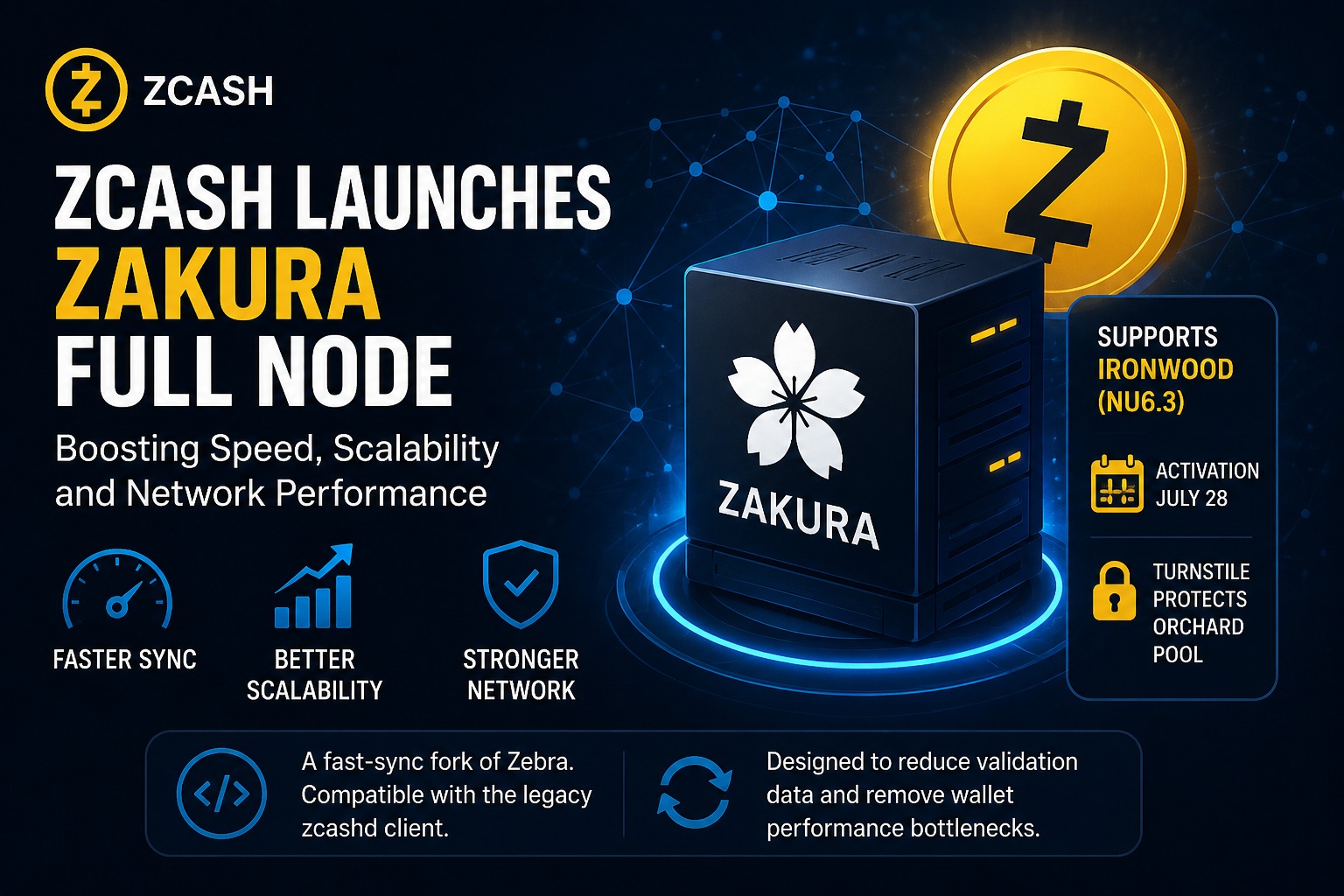
Zcash Launches New Zakura Full Node to Improve Speed and Network Performance
Zcash has introduced a new full node software called Zakura, marking an important step in the cryptocurrency’s efforts to improve network performance and scalability. The new node is maintained by a development team that operates independently from the Zcash Foundation, helping to diversify the ecosystem and strengthen the network’s infrastructure.
The launch comes at a crucial time for Zcash, as the long-running zcashd client officially reaches the end of its life cycle. With users and developers looking for modern alternatives, Zakura is expected to play a significant role in supporting the future growth of the Zcash network.
What Is Zakura?
Zakura is a newly released full node client designed for the Zcash blockchain. A full node helps verify transactions, maintain blockchain records, and support the overall security of the network. Unlike lightweight wallets, full nodes store and validate blockchain data independently.
According to reports, Zakura is built as a streamlined and fast-sync version of Zebra, another Zcash node implementation. The software is designed to synchronize with the blockchain more efficiently, allowing users to get up and running faster while using fewer system resources.
One of the key advantages of Zakura is that it remains compatible with the older zcashd client. This compatibility makes it easier for node operators and developers to transition to the new system without major disruptions.
Why Zcash Needed a New Node
As blockchain networks grow, they face increasing challenges related to speed, scalability, and data processing. More users and transactions can place additional pressure on the network, making it important to optimize performance.
The Zcash community has been working on several initiatives to improve network efficiency. Zakura is one of the latest developments aimed at addressing these challenges.
The project focuses on reducing the amount of validation data required by nodes. By lowering the data burden, nodes can process information more quickly and operate more efficiently. This can help improve overall network throughput, which refers to the number of transactions and operations the network can handle over time.
Another major goal is to remove wallet-related performance bottlenecks. Wallet software can sometimes experience delays when processing large amounts of blockchain data. By improving the underlying infrastructure, Zakura aims to provide a smoother experience for users and developers alike.
Part of a Larger Scaling Strategy
The launch of Zakura is not an isolated effort. It forms part of a broader strategy by the Zcash ecosystem to enhance scalability and privacy technologies.
Among these initiatives is Project Tachyon, a long-term effort focused on improving the performance and efficiency of the Zcash network. Researchers and developers are also exploring advanced privacy-related technologies, including private information retrieval systems that could further strengthen user privacy while maintaining network efficiency.
Together, these projects aim to ensure that Zcash can continue supporting a growing user base without sacrificing its core focus on privacy and security.
Support for the Ironwood Upgrade
Another important feature of Zakura is its support for the upcoming Ironwood (NU6.3) network upgrade, which is scheduled to activate on July 28.
Network upgrades are essential for blockchain projects because they introduce improvements, security enhancements, and new features. Ironwood is expected to bring several important changes to the Zcash ecosystem.
One of the most notable additions is a turnstile mechanism designed to manage withdrawals from the Orchard shielded pool. The Orchard pool is a privacy-focused component of the Zcash network that allows users to conduct shielded transactions.
The new mechanism is intended to monitor and limit withdrawals in a controlled manner. This approach helps protect the network from potential issues linked to a long-standing technical vulnerability.
Addressing a Long-Standing Bug
The Ironwood upgrade also aims to reduce risks associated with a historical soundness bug within the Zcash protocol. While no major exploitation has been publicly confirmed, developers have taken the issue seriously.
The concern is that the bug could theoretically allow the creation of counterfeit ZEC tokens under certain circumstances. To address this risk, the new turnstile mechanism will help control and monitor the movement of funds from the Orchard shielded pool.
By implementing these safeguards, the Zcash development community hopes to strengthen confidence in the network while maintaining its strong privacy protections.
What This Means for Zcash Users
For Zcash users, the launch of Zakura represents another step toward a faster, more efficient, and more scalable blockchain. The software offers improved synchronization speeds, better performance, and compatibility with existing infrastructure.
As the ecosystem prepares for the Ironwood upgrade and the retirement of the zcashd client, Zakura is expected to become an important part of the network’s future.
With ongoing work on Project Tachyon, privacy research, and scalability improvements, Zcash continues to focus on enhancing both performance and security. The introduction of Zakura demonstrates the project’s commitment to modernizing its infrastructure while preserving the privacy-focused features that have made Zcash one of the most recognized privacy cryptocurrencies in the market.
As blockchain technology continues to evolve, developments like Zakura could help position Zcash for stronger growth and broader adoption in the years ahead.