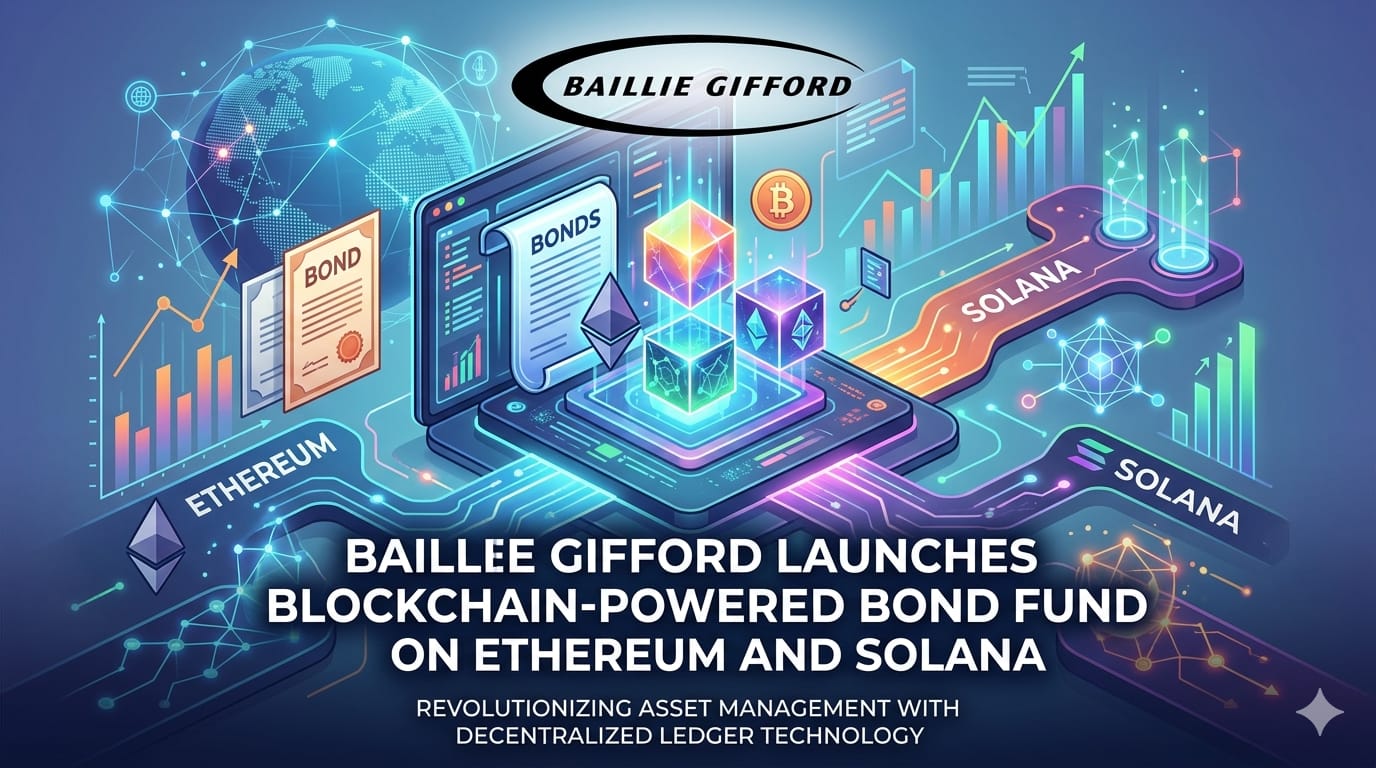
Baillie Gifford Launches Tokenized Bond Fund Using Ethereum and Solana
The financial world is continuing to embrace blockchain technology, and another major step has been taken in this direction. UK-based asset management company Baillie Gifford has launched a new tokenized bond fund that uses the Ethereum and Solana blockchain networks. This move shows that large financial institutions are becoming more interested in using blockchain technology for managing traditional financial assets, not just cryptocurrencies.
Baillie Gifford is one of the largest asset management firms in the United Kingdom, managing more than £200 billion in assets. By introducing this new fund, the company is combining traditional finance with modern blockchain technology to improve efficiency, transparency, and record-keeping.
What Is a Tokenized Bond Fund?
A tokenized fund is an investment fund where ownership records are represented digitally using blockchain technology. Instead of relying completely on traditional paperwork and databases, blockchain is used to record who owns shares in the fund.
In Baillie Gifford’s new fund, ownership information is stored on both the Ethereum and Solana blockchains. These digital records help track investors’ holdings in a secure and transparent way.
The fund itself remains regulated under UK financial laws, which means it follows the same legal and compliance requirements as traditional investment funds. However, blockchain technology helps make certain processes faster and more efficient.
How the New Fund Works
The newly launched fund uses blockchain networks to maintain legal ownership records of investors. When an investor buys or transfers shares in the fund, the ownership information can be updated on the blockchain.
This approach can simplify the transfer and settlement process, which traditionally involves multiple intermediaries and paperwork. By keeping records on-chain, transactions can become quicker and easier to verify.
While ownership records are stored on blockchain networks, the actual assets in the fund are not held on-chain. The fund mainly invests in UK government bonds and corporate debt instruments. These assets continue to be held through traditional custody systems that are already widely used in the financial industry.
This combination allows the company to benefit from blockchain technology while maintaining the stability and regulatory protections of traditional financial infrastructure.
Why Ethereum Was Selected
Ethereum is one of the most widely used blockchain networks in the world. It is known for its smart contract capabilities, which allow complex financial applications to operate securely on the blockchain.
Many banks, financial institutions, and investment firms have already explored Ethereum for various blockchain-based projects. Its strong ecosystem and proven track record made it a logical choice for Baillie Gifford’s tokenized fund.
Ethereum’s widespread adoption among institutional investors also provides confidence that the technology can support large-scale financial operations.
Why Solana Was Included
Alongside Ethereum, Baillie Gifford also chose Solana as part of its blockchain strategy.
Solana is known for processing transactions at high speed while keeping transaction costs relatively low. This makes it attractive for applications that require efficient handling of large volumes of activity.
By using both Ethereum and Solana, the company aims to take advantage of the strengths of each network. Ethereum provides a highly established and secure ecosystem, while Solana offers scalability and cost efficiency.
This dual-blockchain approach allows Baillie Gifford to balance security, performance, and operational costs while managing ownership records.
A Big Step for Asset Tokenization
The launch of this fund represents an important development in the growing field of asset tokenization.
Asset tokenization involves converting ownership rights of real-world assets into digital tokens recorded on blockchain networks. These assets can include bonds, stocks, real estate, and other financial products.
Many experts believe tokenization can improve financial markets by reducing paperwork, increasing transparency, and lowering operational costs. However, large institutions have generally moved slowly because of concerns about regulations and the complexity of integrating blockchain systems.
Baillie Gifford’s decision to launch a regulated tokenized fund demonstrates increasing confidence in the technology and its potential benefits.
What This Means for the Financial Industry
The introduction of this tokenized bond fund could encourage other traditional asset managers to explore similar solutions. As one of the UK’s leading investment firms, Baillie Gifford’s actions are likely to attract attention across the financial sector.
The project also shows that blockchain technology does not necessarily replace existing financial systems. Instead, it can work alongside traditional infrastructure to improve efficiency while maintaining regulatory compliance.
This hybrid approach may be more appealing to institutions that want to benefit from blockchain innovation without completely changing their existing operations.
Baillie Gifford’s launch of a tokenized bond fund on Ethereum and Solana marks another important milestone in the adoption of blockchain technology by traditional financial institutions. By storing ownership records on blockchain networks while keeping underlying assets in conventional custody systems, the company is creating a bridge between traditional finance and digital innovation.
As interest in real-world asset tokenization continues to grow, this initiative could serve as a model for other asset managers looking to modernize their operations. The move highlights how blockchain technology is increasingly being viewed as a practical tool for improving financial services, transparency, and efficiency in the years ahead.
Read More Zcash Launches ZecMap App to Help Users Find Businesses Accepting ZEC Payments
Disclaimer:
The information provided is for informational and educational purposes only and should not be considered financial, investment, or legal advice. We do not guarantee the accuracy, completeness, or reliability of any information presented. Any financial decisions you make based on this content are at your own risk. Always conduct your own research and consult with a qualified financial advisor before making any investment decisions. Investing involves risk, and past performance is not indicative of future results. We are not responsible for any losses or damages resulting from your actions.