
Vitalik Buterin Reveals Key Goals for Ethereum’s New “Lean Ethereum” Roadmap
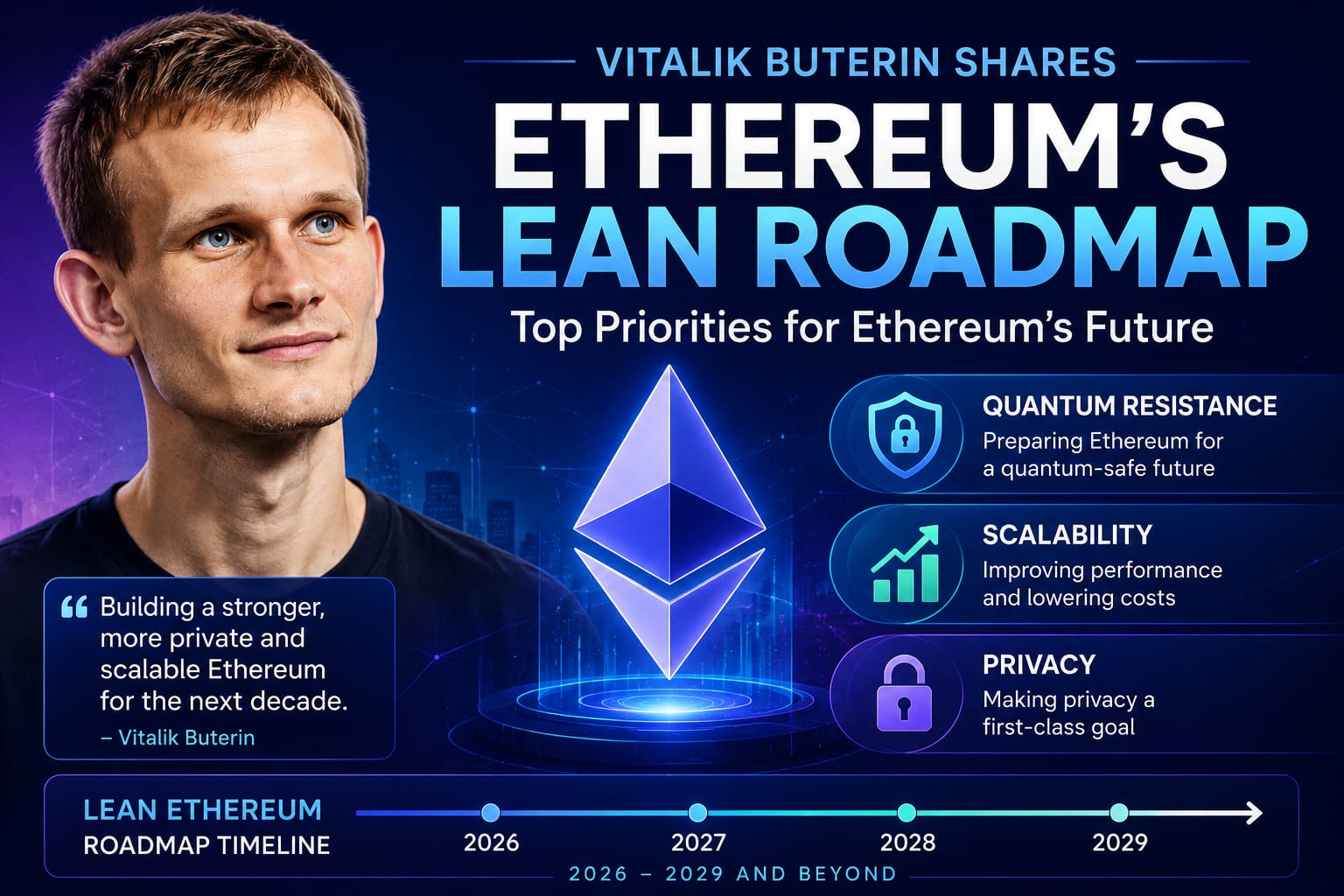
Ethereum co-founder Vitalik Buterin has shared the main priorities for Ethereum’s new “Lean Ethereum” roadmap, a plan that outlines how the blockchain network could evolve over the next several years. The roadmap focuses on improving security, scalability, and privacy, aiming to make Ethereum stronger and more efficient for the future.
According to Buterin, these upgrades are expected to be introduced gradually over the next three to four years. The changes will affect many parts of the Ethereum network and could be as significant as The Merge, the major upgrade completed in September 2022 that moved Ethereum away from energy-intensive mining.
Vitalik Buterin Reveals Key Goals for Ethereum’s New “Lean Ethereum” Roadmap
The new roadmap highlights three key goals that Ethereum developers want to achieve:
1. Stronger Protection Against Quantum Computing
One of the biggest priorities is preparing Ethereum for the future threat of quantum computers. Quantum technology is advancing rapidly, and experts believe it could eventually break many of the security systems used by current blockchains.
Buterin said that quantum resistance has become much more important than before. He explained that developing quantum-safe solutions for Ethereum’s data storage system, known as blobs, has now become an urgent task.
If successful, these upgrades would help protect user funds and network security against future technological threats.
2. Better Scalability
Scalability remains one of Ethereum’s most important challenges. As more users and applications join the network, transaction demand continues to increase.
The Lean Ethereum roadmap aims to improve the network’s ability to process more transactions efficiently while keeping costs lower for users. Better scalability would support decentralized applications, blockchain gaming, financial services, and other growing sectors within the Ethereum ecosystem.
To achieve this, Buterin is supporting the development of a new virtual machine architecture, such as leanISA or RISC-V. These technologies could improve Ethereum’s performance and allow more advanced features in the future.
3. Enhanced User Privacy
Privacy has also become a major focus for Ethereum’s future development.
Buterin described privacy as a “first-class goal,” meaning it is now considered one of the network’s highest priorities. The objective is to give users stronger privacy protections while maintaining transparency and security across the blockchain.
Improved privacy tools could help users conduct transactions and interact with decentralized applications more securely without exposing unnecessary personal information.
Roadmap Covers 2026 to 2029
The Lean Ethereum roadmap outlines a long-term vision stretching from 2026 through 2029. During this period, developers plan to introduce upgrades across multiple layers of the network.
The roadmap comes at a time when Ethereum is undergoing organizational changes as well. The Ethereum Foundation recently reduced its workforce by around 20% and announced plans to cut its budget by approximately 40%.
These measures are intended to create a leaner and more efficient organization that can focus resources on Ethereum’s most important goals.
Leadership Changes at the Ethereum Foundation
The new roadmap is being introduced during a period of transition for the Ethereum Foundation.
Several well-known members and contributors have left the organization in recent months. Among them are Hsiao-Wei Wang and Tomasz Stańczak. Protocol contributors Tim Beiko and Barnabé Monnot also departed earlier this year.
Despite these changes, Ethereum’s development efforts continue, with the foundation aiming to streamline operations and focus on long-term technological improvements.
Experts Question the Timeline
While many industry observers support the goals outlined in the Lean Ethereum roadmap, some have raised concerns about how long the upgrades may take to complete.
Dankrad Feist, a researcher associated with the payments-focused layer-1 blockchain Tempo, praised the roadmap but suggested that the proposed three- to four-year timeline may be too slow.
He argued that modern artificial intelligence tools could help developers build and deploy many of these improvements much faster, potentially within a year.
Similarly, crypto analyst Ignas Fiodorovas expressed support for the roadmap’s objectives but questioned whether the Ethereum Foundation could meet its deadlines. He pointed to the organization’s history of delays in delivering major upgrades.
Concerns About Ether’s Economic Model
Fiodorovas also noted that one important issue appears to be missing from the roadmap: improvements to Ether’s tokenomics.
Tokenomics refers to the economic design of a cryptocurrency, including factors such as supply, demand, and incentives for users and investors.
This topic has gained attention because Ether has experienced price pressure during the broader cryptocurrency market downturn. Some investors believe stronger tokenomics could help improve Ether’s long-term value proposition.
Looking Ahead
The Lean Ethereum roadmap presents an ambitious vision for the future of the world’s second-largest blockchain network. By focusing on quantum security, scalability, and privacy, Ethereum aims to remain competitive and prepared for future technological challenges.
Although questions remain about execution and timelines, the roadmap signals Ethereum’s commitment to long-term innovation. If these upgrades are successfully implemented, they could reshape the network and have an impact comparable to the historic Merge upgrade that transformed Ethereum in 2022.