
U.S. Stocks Markets Rise on Inflation Relief While IBM Shares Tumble
Wall Street Rallies as Cooling Inflation Changes Interest Rate Global financial markets received a major boost after fresh U.S. inflation data showed signs of easing price pressures. Investors welcomed the latest economic report, which raised hopes that the U.S. Federal Reserve may not need to increase interest rates as aggressively as previously expected. As a result, Wall Street posted strong gains, banking stocks surged, and semiconductor companies recovered from recent losses.
At the same time, not every company benefited from the positive market mood. Technology giant IBM suffered a sharp decline after issuing disappointing profit guidance, highlighting that company-specific challenges can still have a significant impact even during a broader market rally.
Inflation Data Brings Relief to Investors
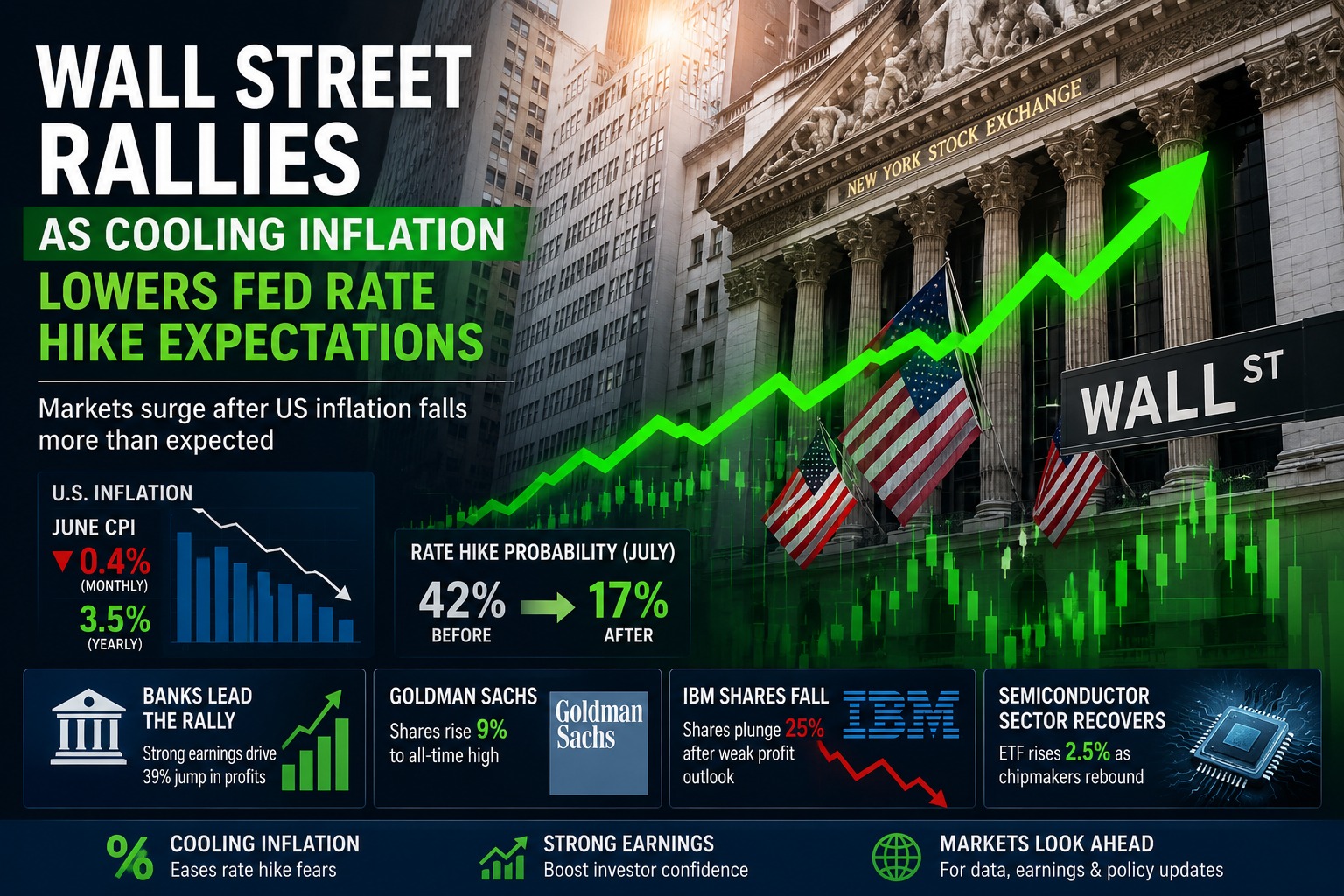
One of the biggest drivers of market optimism was the June Consumer Price Index (CPI) report. The data showed that inflation cooled more than expected, with prices falling by 0.4% on a monthly basis. On an annual basis, inflation eased to 3.5%, indicating that price pressures across the U.S. economy may be starting to stabilize.
For months, investors have closely watched inflation figures because they influence the Federal Reserve’s decisions on interest rates. Higher inflation often leads to higher interest rates, which can slow economic growth and reduce corporate profits. Lower inflation, on the other hand, can create a more favorable environment for businesses and consumers.
Following the release of the latest CPI report, market expectations shifted dramatically. The probability of another Federal Reserve rate hike in July dropped sharply, falling from around 42% to just 17%. This change encouraged investors to move back into stocks, pushing major U.S. indexes higher throughout the trading session.
Banking Sector Leads the Market Higher
Financial stocks were among the biggest winners as several major U.S. banks reported strong quarterly earnings.
The combined profits of five of the largest American banks increased by approximately 39% compared with the previous year. The impressive results were largely driven by strong investment banking activity and higher revenue from equity trading operations.
Many banks benefited from increased market activity as investors adjusted their portfolios amid changing economic expectations. Strong deal-making activity and healthy trading volumes helped boost earnings, demonstrating the resilience of the financial sector despite economic uncertainty.
Goldman Sachs emerged as one of the top performers. The investment banking giant saw its share price jump by about 9%, reaching a new record high. Investors were encouraged by the company’s strong earnings report and positive outlook, making Goldman Sachs one of the key contributors to Wall Street’s rally.
The strong performance of major banks also helped improve overall market sentiment, as financial institutions are often viewed as indicators of broader economic health.
IBM Suffers Historic Share Price Decline
While many sectors enjoyed gains, IBM faced a difficult day in the market.
Shares of International Business Machines plunged by approximately 25%, marking one of the worst trading sessions in the company’s history. The sharp decline came after IBM warned investors that its second-quarter profits would likely be lower than previously expected.
The company cited weaker demand in some of its core business segments, particularly software and infrastructure services. These areas have traditionally been major sources of revenue for IBM, making the slowdown especially concerning for investors.
The disappointing guidance raised questions about the company’s growth prospects in an increasingly competitive technology landscape. As a result, many investors chose to sell their shares, triggering a significant drop in the stock price.
IBM’s decline serves as a reminder that individual company performance can differ greatly from broader market trends. Even during periods of market strength, businesses that fail to meet expectations can face substantial pressure from investors.
Semiconductor Stocks Bounce Back
The semiconductor sector also showed signs of recovery after facing recent weakness.
The VanEck Semiconductor ETF, which tracks major chipmaking companies, gained around 2.5% during the trading session. Several leading semiconductor firms, including Micron Technology and Applied Materials, recovered some of their recent losses.
Investor confidence in the sector improved as broader market conditions became more favorable. Lower inflation and reduced expectations for interest rate hikes generally benefit growth-oriented industries such as technology and semiconductors.
Chipmakers continue to play a critical role in powering modern technologies, including artificial intelligence, cloud computing, electric vehicles, and advanced manufacturing systems. As demand for these technologies grows, many investors remain optimistic about the long-term outlook for the semiconductor industry.
Regulatory Concerns Remain
Despite the sector’s recovery, some uncertainty remains.
The U.S. Commerce Department has indicated that new regulations related to artificial intelligence and semiconductor technology could be introduced in the future. While details have not yet been fully disclosed, any new rules could impact how companies develop, sell, and export advanced technologies.
Potential regulations may create additional volatility for semiconductor and AI-related stocks in the coming months. Investors will likely monitor government announcements closely to understand how future policies could affect business operations and industry growth.
Global Market Outlook
The latest inflation report has provided investors with renewed confidence that the U.S. economy may be moving toward a more stable environment. Cooling inflation reduces pressure on the Federal Reserve to raise interest rates further, which is generally positive for stock markets.
Strong earnings from major banks have reinforced optimism about the health of the financial sector, while semiconductor stocks have shown resilience despite regulatory concerns. However, IBM’s sharp decline highlights that challenges remain for companies struggling to maintain growth in a competitive marketplace.
Looking ahead, investors will continue to focus on upcoming economic data, corporate earnings reports, and potential regulatory developments. If inflation continues to ease and economic growth remains stable, global markets could see further support in the weeks ahead. However, uncertainty surrounding technology regulations and company-specific performance will remain important factors influencing market direction.