
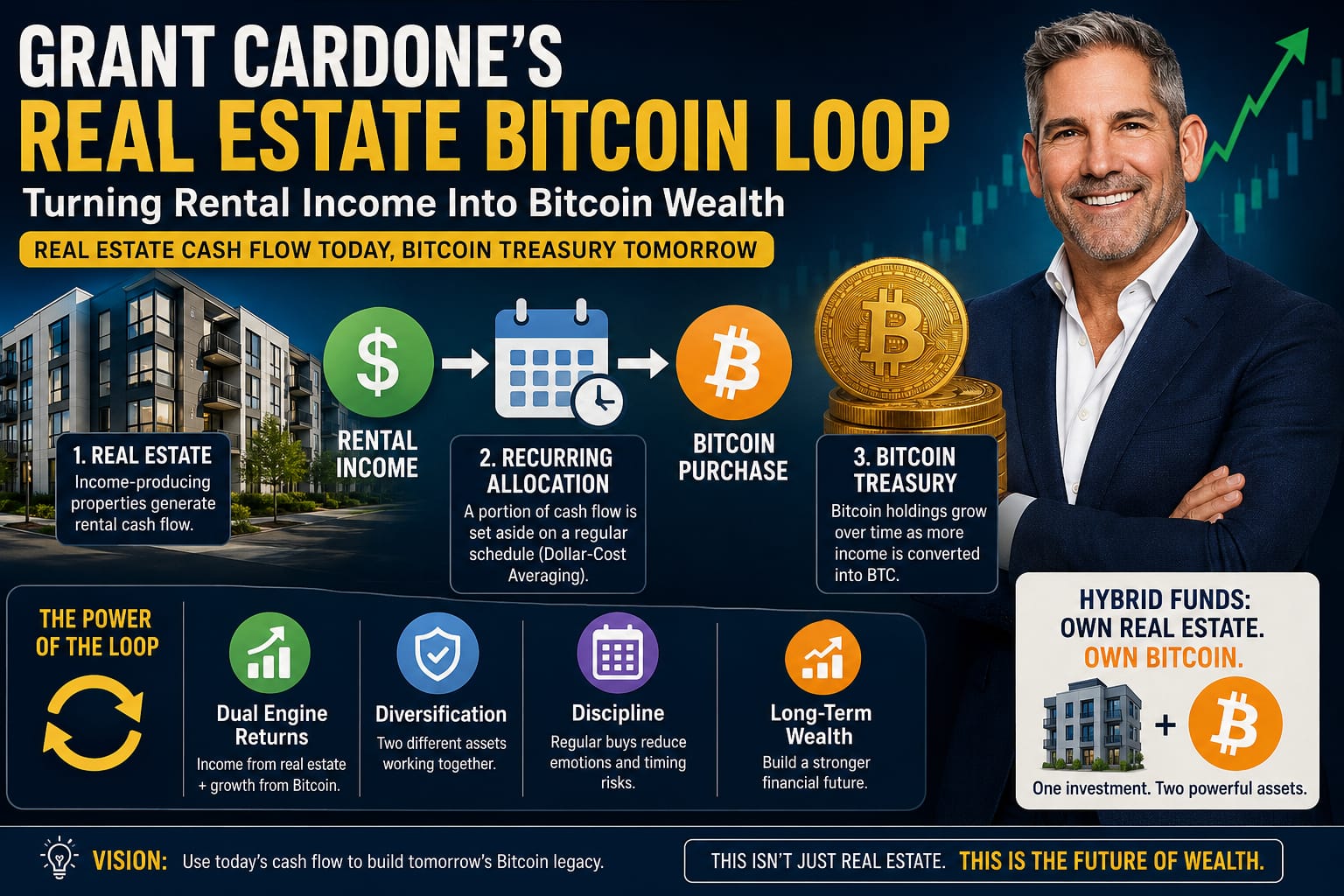
Grant Cardone’s Real Estate and Bitcoin Strategy: Can Rental Income Help Build a Bitcoin Treasury?
The worlds of real estate and cryptocurrency are usually seen as two very different investment areas. Real estate is known for stability and regular income, while Bitcoin is famous for its price swings and high growth potential. However, entrepreneur and real estate investor Grant Cardone is combining both in a unique way.
Cardone is using cash generated from rental properties to regularly buy Bitcoin. This strategy has attracted attention because it creates a connection between traditional real estate investments and digital assets. Many investors are now wondering whether this model could become a new way for companies and investment funds to build Bitcoin reserves.
How the Real Estate-to-Bitcoin Strategy Works
The idea behind the strategy is fairly simple.
Apartment buildings and other rental properties generate monthly income from tenants. After paying expenses such as maintenance, taxes, and management costs, there is usually some cash flow left over.
Instead of keeping all that money in cash or distributing it entirely to investors, a portion of the income is used to purchase Bitcoin on a regular basis.
This approach is similar to a popular investment method called Dollar-Cost Averaging (DCA). With DCA, investors buy a fixed amount of an asset at regular intervals, regardless of whether prices are rising or falling. Over time, this can help reduce the impact of market volatility.
Cardone Capital has publicly stated that it follows this type of strategy. The company combines income-producing real estate with Bitcoin investments, creating a hybrid investment model.
Why Grant Cardone Believes in Bitcoin
Grant Cardone has been a strong supporter of real estate for many years. He often describes property as one of the best wealth-building tools because it can generate consistent income.
At the same time, he sees Bitcoin as a long-term store of value and a potential source of significant growth.
By combining the two, Cardone believes investors can benefit from both stability and growth.
The rental properties provide steady cash flow, while Bitcoin offers exposure to a rapidly growing digital asset market. Instead of choosing one investment over the other, the strategy aims to use real estate income to gradually build a Bitcoin treasury.
Hybrid Funds Combining Property and Bitcoin
One of the most interesting parts of Cardone’s approach is the creation of hybrid funds.
These investment products hold both real estate assets and Bitcoin within the same structure.
For example, reports have highlighted a fund that paired a large apartment property in Boca Raton with a significant Bitcoin allocation. This allows investors to gain exposure to both asset classes through a single investment.
The benefit of this model is transparency. Investors know that part of their investment is tied to income-generating real estate while another portion is linked to Bitcoin’s performance.
This creates two potential sources of returns:
- Rental income from properties
- Appreciation in Bitcoin’s value
If both perform well, investors could benefit from growth coming from two different directions.
Potential Benefits of the Strategy
There are several reasons why investors find this approach attractive.
1. Diversification
The strategy combines two very different assets. Real estate and Bitcoin often react differently to economic events, which may help reduce overall portfolio risk.
2. Regular Bitcoin Accumulation
Instead of trying to predict market tops and bottoms, the strategy purchases Bitcoin regularly. This removes much of the emotional decision-making that often affects crypto investors.
3. Income-Funded Purchases
Unlike many investors who buy Bitcoin using savings or borrowed money, this model uses income generated by properties. The cash flow acts as a funding source for Bitcoin purchases.
4. Long-Term Growth Potential
If Bitcoin continues to gain adoption globally, the value of the accumulated holdings could increase significantly over time.
Risks Investors Should Consider
While the strategy sounds attractive, it is not without risks.
Bitcoin Volatility
Bitcoin prices can move sharply in either direction. Even if rental income remains stable, a major decline in Bitcoin could affect overall fund performance.
Real Estate Market Challenges
Property values and rental income are not guaranteed. Economic slowdowns, rising interest rates, or weaker rental demand can reduce cash flow.
Regulatory Changes
Cryptocurrency regulations continue to evolve around the world. Future rules could impact how funds manage or hold digital assets.
Dual Exposure
Investors are exposed to risks from both real estate and cryptocurrency. If both markets struggle at the same time, returns could be affected.
How This Compares to a Spot Bitcoin ETF
Many investors today gain Bitcoin exposure through spot Bitcoin exchange-traded funds (ETFs).
A Bitcoin ETF provides direct exposure to Bitcoin’s price movements but does not generate income.
Cardone’s model is different because the real estate properties produce rental cash flow. That cash flow can then be used to buy more Bitcoin over time.
In simple terms:
- A Bitcoin ETF mainly depends on Bitcoin’s price performance.
- The real estate-Bitcoin model depends on both rental income and Bitcoin growth.
Some investors may prefer the simplicity of an ETF, while others may like the added income component that real estate provides.
A New Trend for Corporate Treasuries?
The strategy may also offer a glimpse into how companies could manage their treasury assets in the future.
Traditionally, businesses keep excess cash in bank accounts or low-risk investments. However, some companies have started adding Bitcoin to their balance sheets as a long-term asset.
Cardone’s approach takes this concept a step further by using operating income to steadily build Bitcoin holdings.
Whether this model becomes widely adopted remains to be seen. However, it demonstrates how traditional investments and digital assets can work together in new ways.
Grant Cardone’s real estate-to-Bitcoin strategy represents an innovative approach to investing. By using rental income to regularly purchase Bitcoin, the model combines the stability of income-producing properties with the growth potential of cryptocurrency.
While the strategy offers diversification and long-term opportunities, it also comes with risks tied to both real estate and Bitcoin markets. Investors should carefully understand these risks before considering a similar approach.
As more institutions explore digital assets, this hybrid model could become an important example of how traditional cash-flow businesses may build Bitcoin treasuries in the years ahead.
Read More Wisconsin Moves to Tighten Bitcoin ATM Rules with Mandatory ID Checks for All Transactions
Disclaimer:
The information provided is for informational and educational purposes only and should not be considered financial, investment, or legal advice. We do not guarantee the accuracy, completeness, or reliability of any information presented. Any financial decisions you make based on this content are at your own risk. Always conduct your own research and consult with a qualified financial advisor before making any investment decisions. Investing involves risk, and past performance is not indicative of future results. We are not responsible for any losses or damages resulting from your actions.